

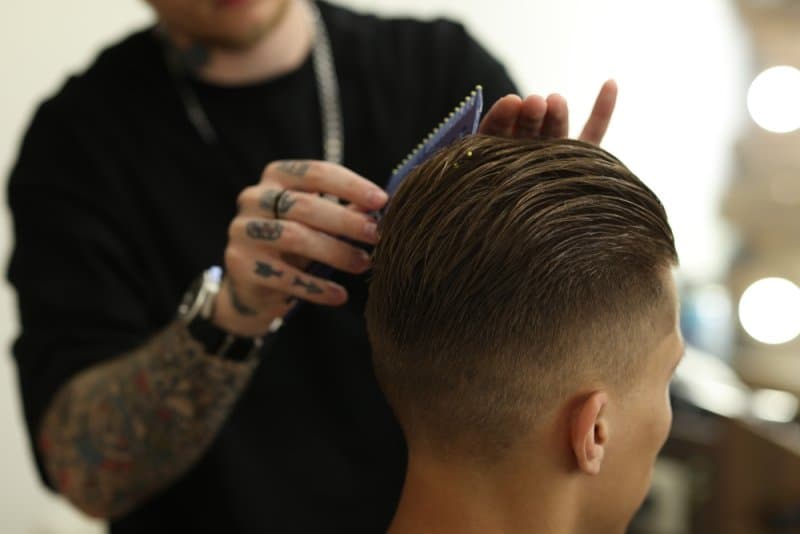
How you style your hair matters just as much as the cut itself. The best haircut for thin hair always creates fullness but keeps as much density as possible. There’s a difference between fine hair (that’s all about the strand thickness) and thin hair (which means you simply have fewer strands). Either way, a cut that works with your natural texture makes all the difference.
Heavy ends, some well-placed layers, and picking the right length can completely change your look. It’s all about finding a style that fits your face, your habits, and the amount of effort you want to put in. Here, we’ll break down flattering haircuts for thin hair and how to make each one actually look thicker.
Haircuts for fine thin hair work best when the shape supports the strands instead of weighing them down. A blunt bob, a soft crop, or a lightly layered lob can make the ends appear denser.
Avoid removing too much hair through thinning shears. Fine strands can lose their shape quickly when excess weight is removed, leaving the ends wispy. Ask your stylist to assess your natural density before adding layers.
Hairstyles that make hair look thicker usually create lift near the roots or add visual width around the sides. A deep side part, soft waves, and a slight bend through the mid-lengths can help.
A middle part can work too, particularly with a blunt bob. The best haircut for thin hair should still look good when styled simply, not only after a salon blowout.
Shorter cuts reduce the weight pulling hair down, making them useful for people whose roots tend to fall flat.
Blunt Chin-Length Bob
This cut keeps the perimeter strong, creating the appearance of thicker ends. It works particularly well on straight or slightly wavy hair. A clean outline does much of the work, so you do not need complicated styling every morning.
Textured Pixie Cut
A pixie with a little length at the crown can create height without relying on long strands for volume. It suits people who prefer a short, practical style. Regular trims keep the shape from becoming flat or uneven.
French Bob With Soft Fringe
A French bob usually sits around the jaw, sometimes with a fringe. Its compact shape can make fine hair appear denser. Keep the fringe light rather than overly thick if your overall hair density is low.
These short haircuts for thin hair are not interchangeable. A pixie needs more frequent shaping, while a bob may offer a simpler grow-out period. Choose based on how often you want to visit the salon.
Don't Miss: Hair Growth Tips to Boost Scalp Health and Hair Thickness
Layers can add movement, but the wrong technique can leave thin hair looking even thinner at the ends.
Layered haircuts for fine hair should be subtle, especially when the hair is sparse around the temples or crown. Long, soft layers can create movement without removing too much fullness from the perimeter.
A few shorter pieces around the face may also add shape. Avoid excessive choppy layers throughout the head if your hair already has see-through ends. The best haircut for thin hair balances movement with a solid outline.
A good cut gives you a starting point. Styling determines how much of that volume remains through the day.
These hairstyles that make hair look thicker rely on lift and shape, not excessive product. Start small.
Shoulder-length styles offer flexibility because they can be worn straight, wavy, tied back, or tucked behind the ears.
Blunt Lob
A long bob ending near the shoulders keeps the bottom edge looking full. It is one of the best shoulder-length haircuts for thin hair because it offers styling options without the weight of very long hair. Slightly curved ends can make the cut look fuller.
Soft Layers With Face-Framing Pieces
This style suits people who want movement around the face. Keep the layers concentrated near the front and upper sections, leaving enough density at the bottom. It is a practical compromise for hair that looks flat when cut into one solid shape.
The best shoulder-length haircuts for thin hair usually avoid excessive length below the chest, where weight can make roots look flatter. But personal texture matters; naturally wavy hair may hold volume at longer lengths.
Suggested Reading: Best Hair Mask for Damaged Hair: Repair & Revive Strands
Use this comparison to narrow down the best haircut for thin hair based on your texture, desired volume, and maintenance preferences.
| Haircut | Best suited for | Volume effect | Maintenance |
|---|---|---|---|
| Blunt bob | Straight, fine hair | Fuller-looking ends | Moderate |
| Textured pixie | Fine hair with flat roots | Lift at the crown | Frequent trims |
| French bob | Fine or slightly wavy hair | Compact, dense shape | Moderate |
| Blunt lob | Straight or wavy hair | Strong perimeter | Low to moderate |
| Soft layered cut | Hair needing movement | Shape around the face | Moderate |
No haircut can increase the number of hair follicles. The goal is to make the existing hair look fuller while keeping it manageable.
Face shape can help narrow your options, but it should not override hair density or natural growth patterns.
For round faces, a longer bob with a little height at the crown can create a more elongated look. For square faces, soft face-framing pieces may soften the jawline. Oval faces can usually accommodate pixies, bobs, and shoulder-length cuts.
If your forehead is wider or your hairline is sparse, discuss fringe placement with your stylist before committing. The best haircut for thin hair should work with your actual hairline, not hide it at the expense of fullness elsewhere.
Also Read: Best Frizzy Hair Control Tips and Hacks for Humid Weather
Keep in mind, the best haircut isn’t always the shortest or the most heavily layered. What you really need is a cut that keeps your hair looking full, moves naturally, and doesn’t demand hours to style. Blunt bobs make your ends look thicker, pixies give you height at the crown, and shoulder-length cuts leave you some options for day-to-day styling.
Even little tweaks can help. Before your next hair appointment, point out where your hair feels thinnest and talk about how much time you spend styling. The right cut—plus a gentle approach to styling—makes fine hair look fuller, without pretending you have thick hair.
Yep, smart highlights and lowlights add dimension and make your hair look thicker. Just don’t overdo the bleach—it’s rough on fine strands and leads to damage.
Short styles usually need a trim every four to eight weeks, while longer cuts can stretch that to six to twelve weeks. How long you go depends a lot on your haircut’s shape and the condition of your ends.
You don’t have to skip them. Wispy fringe or curtain bangs add interest and shape, but go easy—thick bangs use up a lot of your available hair. Ask your stylist to check out your hairline first and give you an honest opinion.
No, it just can’t. A new style might help your hair look better, but it won’t touch the root causes of hair loss. If you’re noticing more shedding, a wider part, or bald patches, it’s time to call a dermatologist.
It’s gentler because you’re not using heat. But sometimes, air-dried hair falls flat, especially at the roots. Try blow-drying on low with a heat protectant for a bit more lift—just don’t go overboard.
This content was created by AI